
Common Challenges Faced by Geophysical Surveyors
- Posted by:
- Admin
- Tags:
- geophysical surveyors, site investigation
- Posted date:
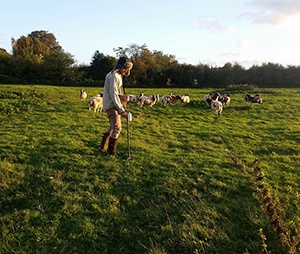
Common challenges faced by geophysical surveyors include weak target contrast, interference, difficult access and ambiguous interpretation. Good practice addresses these before and during fieldwork, then explains the remaining uncertainty in the report so a client can make an informed investigation decision. Geophysical methods detect differences in physical properties. A buried feature can remain undetected if its response closely matches...
Posted by:Admin on: Read More
Geophysical Surveyors in Mineral Exploration
- Posted by:
- Admin
- Tags:
- geophysical surveyors, site investigation
- Posted date:
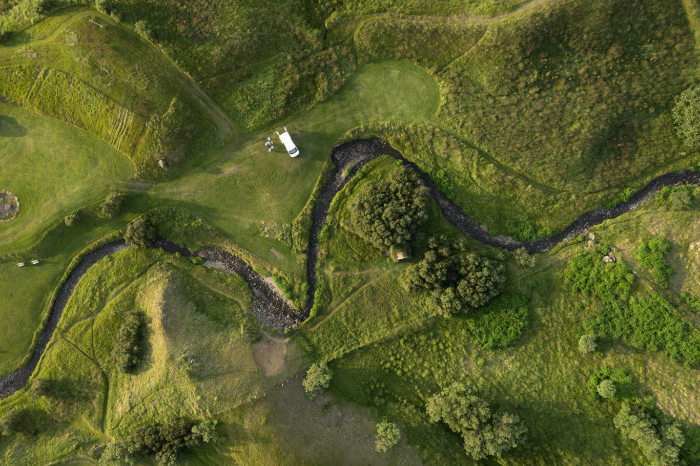
Geophysical surveyors in mineral exploration measure contrasts that can reveal geological structures, alteration and possible mineralised targets. They help narrow the search area and plan follow-up sampling or drilling. A geophysical anomaly is an exploration clue, not proof of an economically recoverable ore deposit. Mineral exploration begins with a deposit model: the host rocks, structures and physical properties expected for the commodity...
Posted by:Admin on: Read More
The Role of Geophysical Surveyors in Construction
- Posted by:
- Admin
- Tags:
- geophysical surveyors, site investigation
- Posted date:
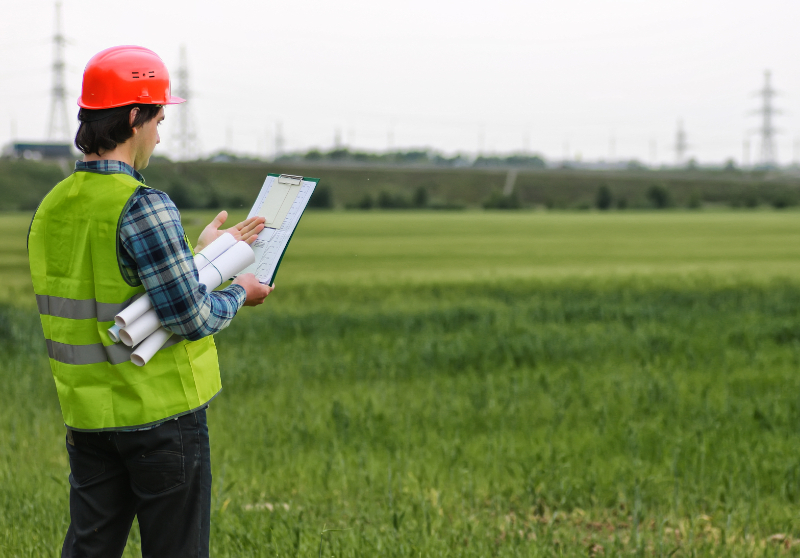
Geophysical surveyors help construction teams investigate buried features and changes in ground conditions before those uncertainties become design or excavation problems. Their role is to select suitable measurements, interpret the results and connect the evidence with an investigation plan that engineers and project managers can use. A useful construction survey begins with a question: where might a buried obstruction lie, does a proposed...
Posted by:Admin on: Read More
Using Magnetic Susceptibility to Study Rocks and Sediments
- Posted by:
- Admin
- Tags:
- magnetic susceptibility, magnetic properties
- Posted date:
Using magnetic susceptibility to study rocks and sediments helps researchers trace mineral changes, compare layers and investigate how deposits formed. It is a rapid screening measurement whose meaning is checked against mineralogy, sediment description and the history of the material. Rocks and sediments contain varying mixtures of weakly and strongly magnetic minerals. Susceptibility provides a repeatable way to compare these mixtures...
Posted by:Admin on: Read More
What Magnetic Susceptibility Surveys Reveal
- Posted by:
- Admin
- Tags:
- magnetic susceptibility, magnetic properties
- Posted date:
Magnetic susceptibility surveys reveal differences in how readily near-surface soils become magnetised. Their archaeological value lies in identifying broad zones of enhancement that may reflect former occupation, burning or industrial activity, while helping surveyors decide where detailed investigation is worthwhile. The strongest interpretation usually comes from a spatial pattern rather than a single measurement. A coherent zone of...
Posted by:Admin on: Read More
The Physics Behind Magnetic Susceptibility
- Posted by:
- Admin
- Tags:
- magnetic susceptibility, magnetic properties
- Posted date:
Magnetic susceptibility describes how strongly a material becomes magnetised in an applied field. Understanding the physics behind magnetic susceptibility explains why iron minerals, grain size and temperature affect measurements, and why a soil reading is more than a simple measure of its iron content. In the simplest linear model, magnetisation M equals susceptibility κ multiplied by field strength H: M = κH. Magnetisation expresses...
Posted by:Admin on: Read More
How Gradiometry is used in building planning
- Posted by:
- Admin
- Tags:
- gradiometry, geophysical surveys, archaeological surveys, ground condition surveys
- Posted date:
Gradiometry plays an important role in building planning by helping identify possible buried archaeology before construction begins. This article explains how gradiometry surveys work, what they can find, and why they are useful for developers, planners, and heritage specialists. Gradiometry is a way of measuring small changes in the Earth’s magnetic field across a piece of land. A gradiometer uses two sensors that are set...
Posted by:Admin on: Read More
Uses of geophysical surveys on historical sites
- Posted by:
- Admin
- Tags:
- geophysical surveys, archaeological surveys, ground mapping, geophysical and resistivity surveys
- Posted date:

Geophysical surveys are a useful way to explore historic sites without excavating the ground. This article explains how different survey methods can help archaeologists find buried walls, foundations, ditches, pits, roads, graves, and settlement layouts. It also looks at how these surveys help with planning excavation work, site management, and heritage protection across the UK. Geophysical surveys are used to study what is below...
Posted by:Admin on: Read More